

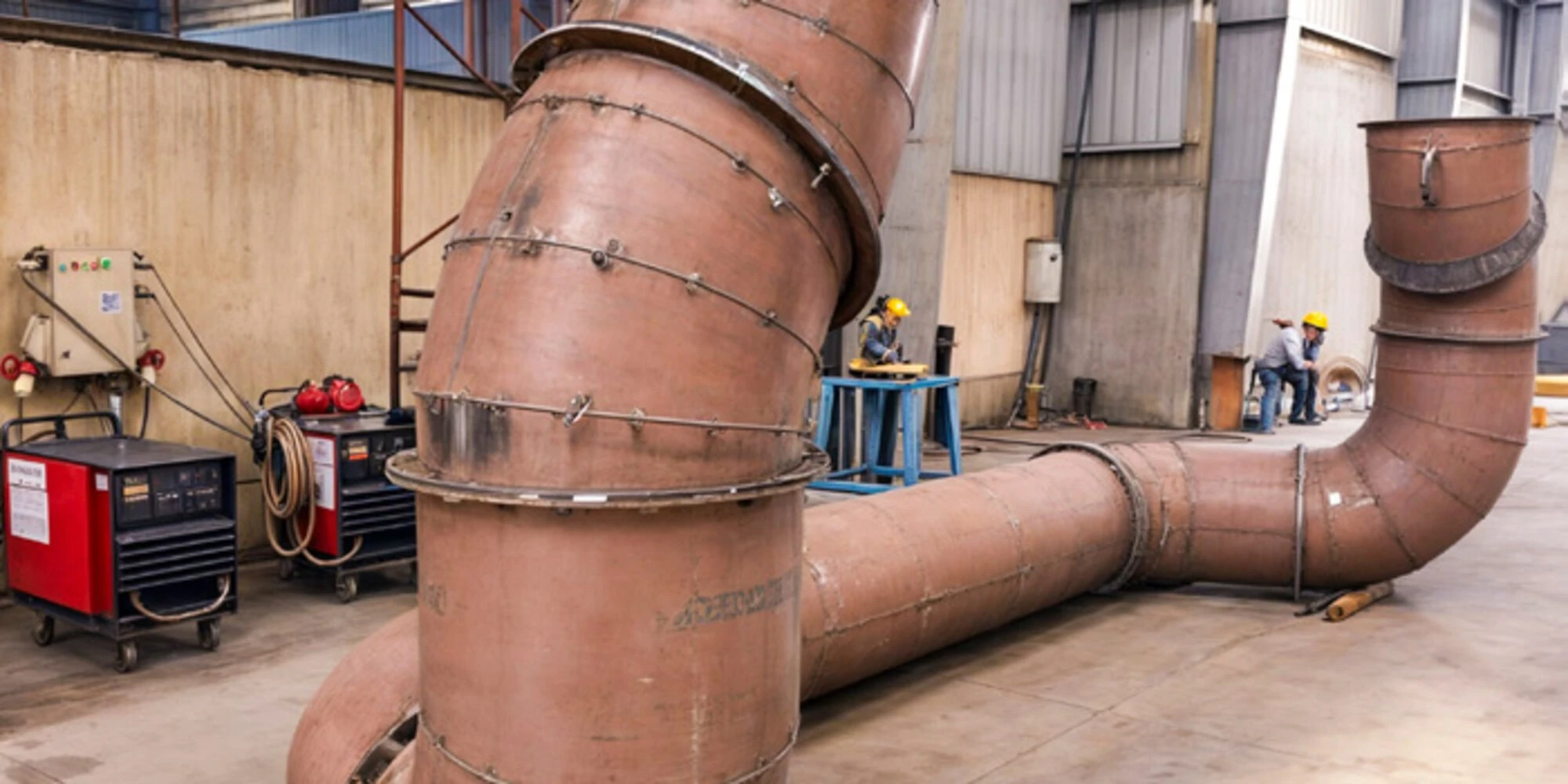
Metal pipes that carry dust or powder rarely fail in the middle of a straight run first. They fail at the bends.
Dust feels soft in your hand. Inside a fast pipe, it acts more like a blast of sand. On a straight pipe, the dust mostly slides along the wall. At a bend, the dust cannot turn with the air. It smacks the outer wall again and again. That spot gets thin. Then a hole opens.
Factories that move cement powder, steel dust, or rock dust see this a lot. The story is the same in many other dusty lines too.
Early signs at the bend
Trouble often starts small.
- The same bend needs a weld patch every stop
- Dust leaks near a bend while the straight pipe still looks fine
- A spot feels thin when you tap it
- The fan works harder, but suction still feels weak
People seal the leak and keep running. That buys a day. It does not stop the wear inside.
Patch, thicken, or change the steel
Most repairs run through these in order:
Weld patches
A patch closes the hole for a short time. Soft patch edges make a new ridge. Dust hits that ridge harder. The area around the patch often fails next.
Thicker pipe wall
A thicker soft-steel bend lasts longer than a thin one. It still wears the same way. You buy time.
Hard steel, lined bends, or a swap-out face
A lasting fix usually puts a harder surface where the dust hits. Or it replaces the whole bend with a harder section.
Common choices:
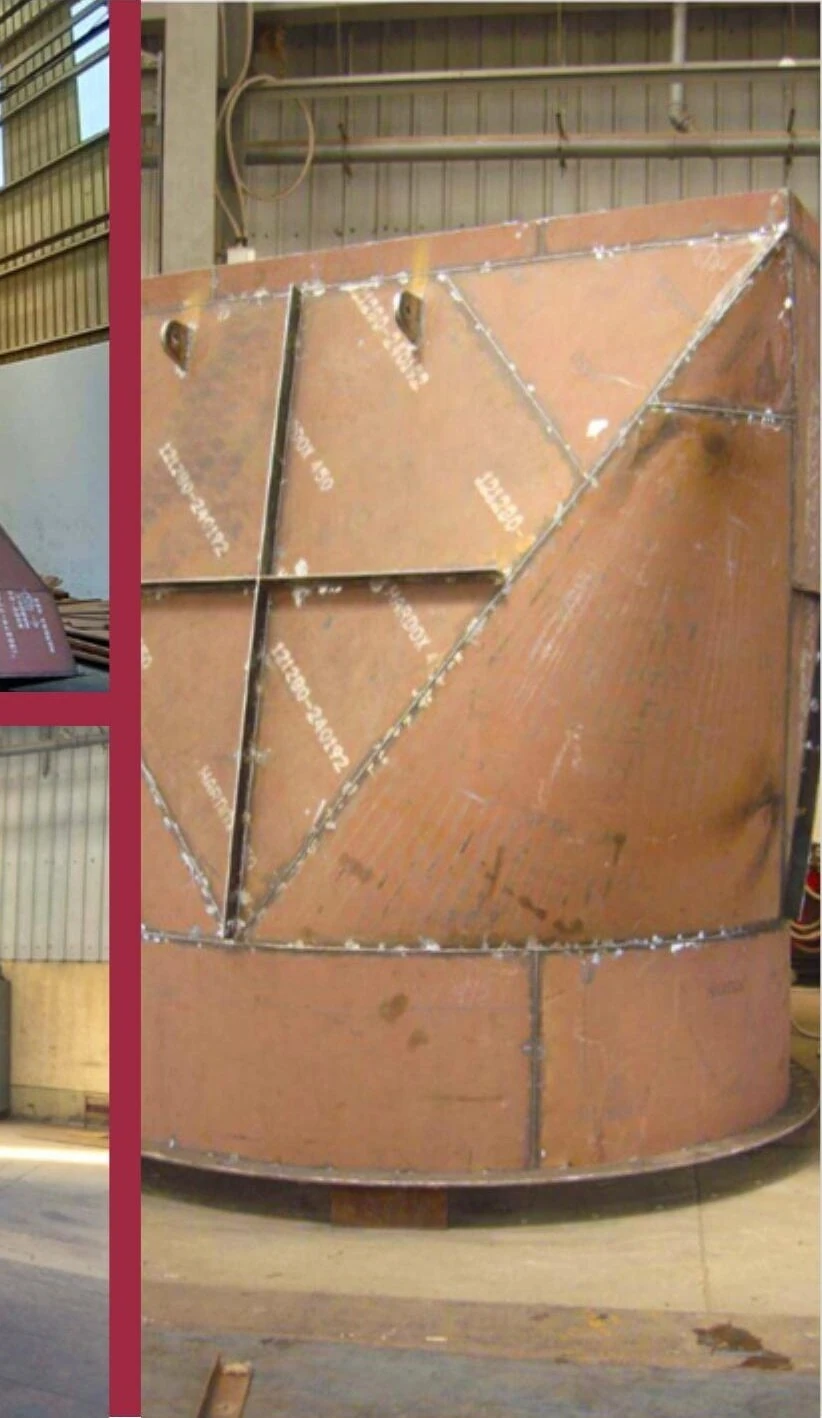
- Hard wear steel (such as Hardox®) that a shop can cut, bend, and weld to fit
- Ceramic or carbide linings for very fine, fast dust with few big rocks
- A bolted outer plate so you change only the worst face
Ceramic can last a long time with fine dust. It is harder to fix on site. Hard steel sits in the middle. It lasts longer than soft steel. A shop can still cut and weld it. You can match it to the pipe you already have.
Simple checks that help any material
Ask these before you order plate:
- Is the bend too sharp?
- Is the air moving faster than it needs to?
- Can the first hit land on a pile of material, not bare steel?
- Can the outer wall be a bolted plate instead of one welded shell?
Better steel helps more when the pipe stops aiming all the hits at one weld.
Ordering the new section
Which hard steel? How thick? Full pipe piece or only a wear plate? What do you send so it fits?
A simple Hardox® path
- Hardox® 450 when the part needs bending and welding, and wear is steady but not extreme
- Hardox® 500 when soft steel or softer plate already failed too soon
- Hardox® HiAce when rust and wear hit together (wet or harsh gas)
Harder is not always better. Thickness still matters. Many lines use a harder grade only on the worst spots.
Full pipe piece or wear plate only?
Use a full piece when flanges, size, or shape are wrong, or the shell is too far gone. Use a wear plate or outer panel when the frame is still sound and only the wear face is dying. Photos of the thin spots usually make the call clear.
What to send so the part fits
- Photos of the bad area before you cut it out
- Notes on how thin the bend is
- Size: diameter, bend radius, length, flanges
- What moves in the pipe: cement dust, steel dust, rock dust, coal, slurry
- Full piece or wear plate only
A sample is even better than a guess from a catalog.
Straight answers
Why do bends fail first?
Dust turns there and hits the outer wall hardest.
Does a dust leak mean the pipe is finished?
Not always. It often means wear or a bad joint inside. It will not heal on its own.
Is patch welding enough?
For an emergency, yes. As a long plan, it usually fails sooner next time.
Do we need ceramic, or is hard steel enough?
Fine, fast dust with few big hits often favors ceramic. Mixed jobs that need shop cutting and field repair often favor hard steel. Some lines use both in different spots.
The short version
- The outer bend is the wear face. Treat it as a replaceable part.
- A patch moves the failure to its own edge; it rarely stops it.
- Photos of the thin spots plus the media in the pipe are enough to quote a matching piece.
Talk about a pipe or wear-plate replacement
Related reading: steel ducts and cement ducts pages, plus Hardox® 450, Hardox® 500, and Hardox® HiAce notes.