

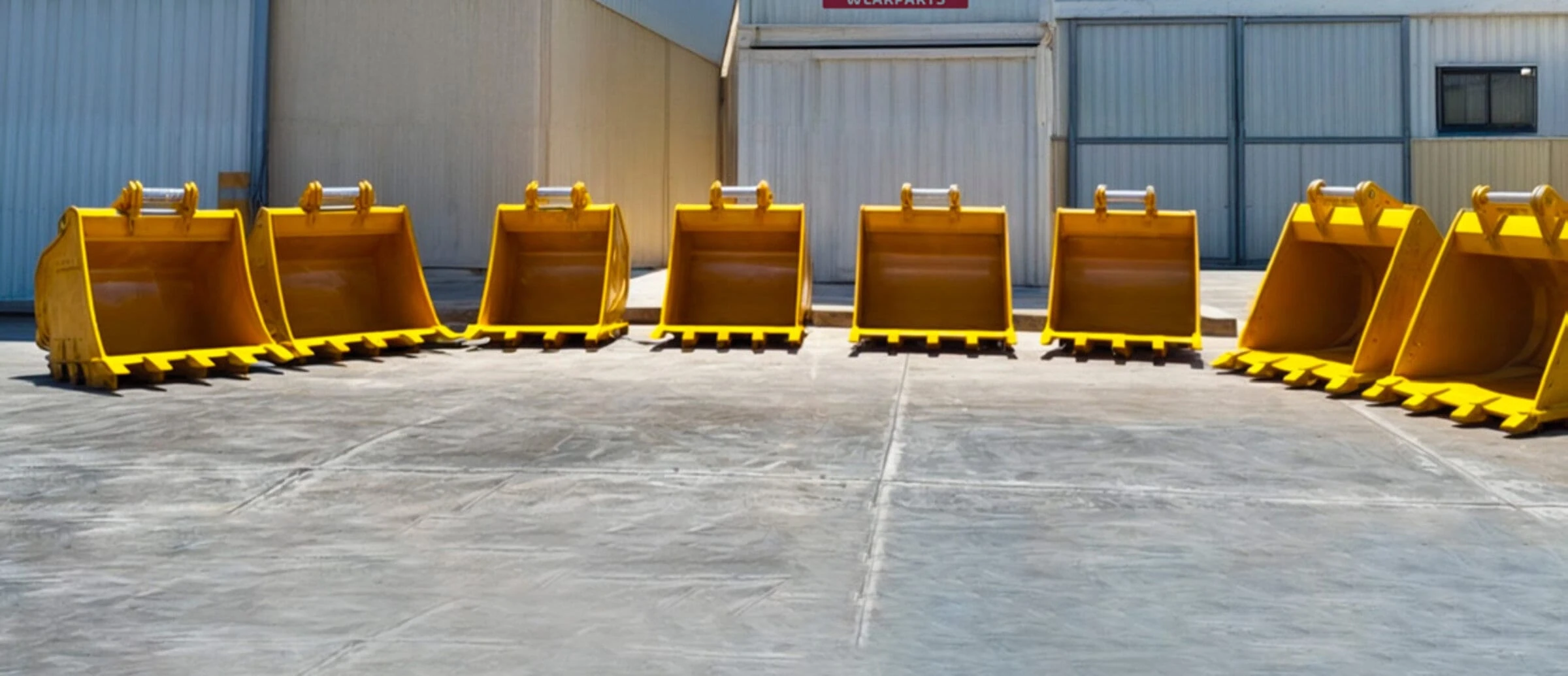
A used digger bucket costs more than steel. It costs machine time while the unit waits. Soft patches crack again. Edges die early. The machine still looks fine. The bucket does not.
Can this bucket be fixed, or do you need a new one?
Signs a rebuild can work
Watch for these signs:
- The floor or side walls are thin, but the shape still looks true
- Edges and teeth adapters fail faster than the shell
- Soft-steel weld patches crack again in weeks
- You can still measure the pins, bosses, and machine fit
Those signs often mean a rebuild can work. The shell is still useful. The wear surface is not.
Rebuild, patch, or replace
You usually face three paths.
Soft patches again
This gets you through a short job. It rarely lasts. Soft steel on a high-wear floor thins fast. Patches crack. You are back in the same place.
Rebuild the bucket in hard steel
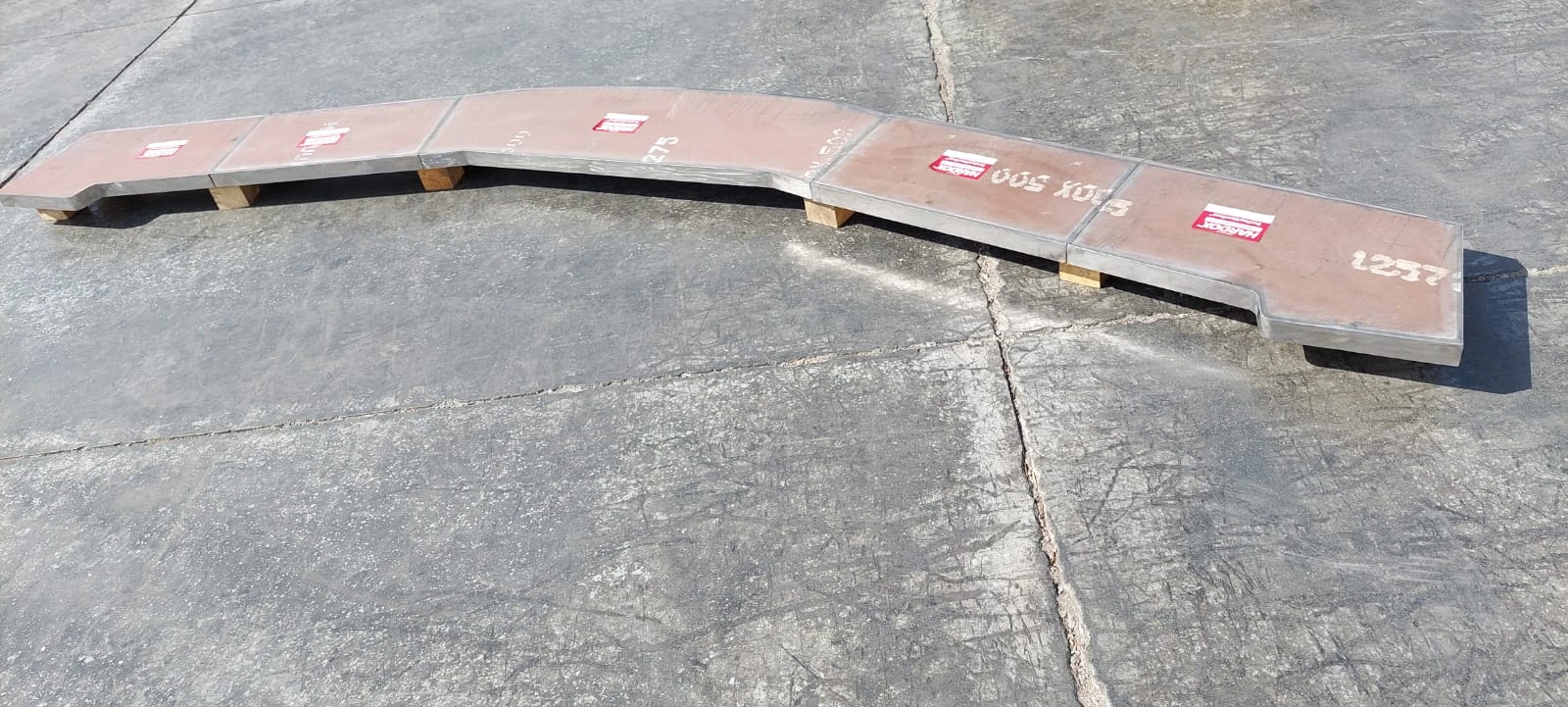
A shop cuts out bad plate. It fits new Hardox® hard steel to the shell or builds key wear parts to match the machine. Cutting edges, side cutters, and wear bars can be part of the same job. This path makes sense when the frame and pin areas are still sound.
Buy a full new bucket
Choose this when the structure is no longer safe or true. Cracked bosses, bent pin areas, or a warped shell that will not come back to shape are common reasons. Also choose this when you change machine model or capacity and need a new pattern.
What to send the shop
Send a clear package so the shop does not guess:
- The used bucket, clear photos, or key measures
- Machine make and model when you have it
- What the bucket digs: rock, sand, scrap, wet clay, demolition
- Your target: rebuild the old one, or build new
Grade notes in plain words
- Hardox® 500 and Hardox® 500 Tuf cover many construction and quarry buckets
- Hardox® 450 still fits mixed-duty shells
- Edges and wear bars often use harder plate than the shell
Match the package to the rock and the hits. Do not buy one grade slogan for every plate on the bucket.

Common questions
Can every used bucket be fixed?
No. Unsafe pin areas, bad cracks, or a warped shell often mean replace.
Is soft steel okay for a rebuild?
On high-wear floors and edges, soft steel usually fails early again.
What fails first on many buckets?
Floors, edges, and corners where rock slides and hits.
What should I photograph?
Thin floors, cracked patches, edges, pin bosses, and the machine mount.
Rule of thumb
- A true shell with thin floors: rebuild it.
- Cracked bosses or a warped shell: replace it.
- Soft patches on a wear floor: first aid, not a plan.
Talk about a bucket rebuild or new build
Related reading: excavator buckets page and Hardox® 500 / 500 Tuf grade notes.